
The Gentle Awakening: A Beginner’s Guide to Finding Inner Peace
Table of Contents
- Understanding Inner Peace: What It Is and What It Isn’t
- Creating Space: The Role of Stillness in a Busy World
- The Breath as an Anchor: Simple Practices for Beginners
- Gentle Mindfulness: Observing Thoughts Without Judgment
- Cultivating Compassion: Toward Yourself and Others
- Integrating Peace into Daily Life: Rituals and Routines
- Final Reflections
Welcome to The Gentle Awakening, a compassionate roadmap for anyone who has ever felt overwhelmed by the noise of modern life and longed for a quieter center within. Inner peace is not a distant prize reserved for monks on mountaintops or seasoned meditators who sit in silence for hours each day. It is a natural state of being that already exists beneath the surface of your thoughts, waiting to be noticed, nurtured, and allowed to emerge.
This guide is written especially for beginners who may feel uncertain about where to start or worry that they are doing it wrong. You do not need special equipment, expensive retreats, or hours of free time. What you need is a willingness to pause, a curious heart, and the gentle intention to treat yourself with kindness as you explore what peace feels like in your own body, mind, and spirit.
Understanding Inner Peace: What It Is and What It Isn’t
Inner peace is often misunderstood as the absence of conflict, stress, or difficult emotions. Many beginners believe that finding peace means reaching a permanent state of bliss where nothing ever bothers them again. In reality, inner peace is not about eliminating life’s challenges; it is about changing your relationship to those challenges so that they no longer shake your core sense of well-being. It is the quiet confidence that you can meet whatever arises with steadiness rather than reactivity.
Another common misconception is that inner peace requires passivity or withdrawal from the world. Some people fear that if they become too peaceful, they will lose their drive, ambition, or ability to respond to injustice. The truth is quite the opposite. When you are grounded in inner peace, your actions become clearer and more purposeful. You are less likely to act out of fear, anger, or desperation, and more likely to respond from a place of wisdom and compassion. Peace does not make you indifferent; it makes you more present and more effective.
For the beginner, it helps to think of inner peace as a dynamic equilibrium rather than a fixed destination. Like learning to ride a bicycle, you will wobble, lose balance, and find your center again many times. Each time you notice that you have been swept away by worry or frustration and gently return to your breath or your body, you are strengthening your peace muscle. Over time, these small returns accumulate, and the state of inner calm becomes easier to access even in the midst of a busy day.
It is also important to recognize that inner peace is deeply personal. What brings serenity to one person might feel stifling or boring to another. Your path may involve nature, creative expression, prayer, silence, or community. The goal is not to copy someone else’s version of peace but to discover what resonates with your own spirit. As you move through this guide, give yourself permission to experiment, to discard what does not fit, and to honor the unique rhythm of your own awakening.
Finally, remember that inner peace is not a reward for good behavior or spiritual perfection. You do not have to earn it by meditating for a certain number of hours or by never feeling angry again. It is already within you, like the sky behind the clouds. The practice is simply learning to look up, to remember that the sky is always there, and to trust that even on the stormiest days, the blue expanse remains unchanged.
Creating Space: The Role of Stillness in a Busy World
Modern life moves at a relentless pace. Notifications ping, responsibilities pile up, and the mind races from one task to the next without pausing to breathe. In this environment, stillness can feel radical, even uncomfortable. Many beginners report that when they first try to sit quietly, their thoughts seem to shout louder than ever. This is not a sign that you are doing something wrong; it is simply evidence that your mind is accustomed to constant stimulation and has not yet learned the language of quiet.
Creating space for inner peace begins with small, intentional boundaries. You do not need to clear your entire schedule or retreat to a cabin in the woods. Start by carving out five or ten minutes each day where you commit to doing nothing productive. Sit by a window, stand in your backyard, or close your office door and simply be. During this time, give yourself permission to let the to-do list wait. The world will not fall apart if you are unavailable for a few minutes, and you may find that you return to your tasks with greater clarity and energy.
Physical space matters as much as temporal space. Cluttered environments often reflect and reinforce cluttered minds. You do not need to adopt a minimalist lifestyle overnight, but consider designating one small area of your home as a peace corner. It could be a chair with a soft blanket, a shelf with a candle and a plant, or even a single cushion on the floor. When you enter this space, your nervous system begins to receive a signal that it is safe to slow down. Over time, the mere sight of this corner can invite a sense of calm before you even sit down.
Stillness is not about forcing your mind to become blank. It is about allowing your experience to be exactly as it is, without the urge to fix, change, or escape it. If boredom arises, notice boredom. If restlessness arises, notice restlessness. If peace arises, notice peace. By observing these states without judgment, you create a spacious awareness that holds them all. This spaciousness is the foundation of inner peace, because it means you are no longer identified with every passing thought or emotion.
As a beginner, you may encounter resistance to stillness. You might feel guilty for not being productive, or you might discover uncomfortable feelings that you have been avoiding. This resistance is part of the process. Rather than pushing it away, greet it with curiosity. Ask yourself what it needs. Often, the simple act of acknowledging resistance is enough to soften it, creating even more room for peace to grow.

The Breath as an Anchor: Simple Practices for Beginners
The breath is one of the most accessible and reliable tools for finding inner peace because it is always with you. Unlike external circumstances, which shift constantly, your breath is a constant companion that reflects the state of your nervous system. When you are anxious, your breath tends to become shallow and rapid. When you are relaxed, it deepens and slows. By learning to observe and gently regulate your breath, you gain a direct way to influence your inner state.
For beginners, the simplest practice is to bring mindful attention to the natural flow of breathing without trying to change it. Sit comfortably with your spine straight but not rigid, and rest your hands in your lap. Close your eyes if that feels comfortable, or soften your gaze toward the floor. Notice the sensation of air entering your nostrils, the coolness on the inhale, and the warmth on the exhale. Feel the rise and fall of your chest or the gentle expansion of your belly. When your mind wanders—and it will—gently guide your attention back to the breath. Each return is a moment of awakening.
Once you are comfortable with simple observation, you can explore structured breathing techniques. One beginner-friendly method is diaphragmatic breathing, also known as belly breathing. Place one hand on your chest and one on your abdomen. Inhale slowly through your nose, aiming to make the hand on your belly rise while the hand on your chest remains relatively still. Exhale slowly through your mouth or nose, feeling your belly fall. This pattern signals safety to your nervous system and can reduce stress within a few minutes.
Another useful technique is box breathing, which involves inhaling for a count of four, holding the breath for a count of four, exhaling for a count of four, and holding again for a count of four. The equal lengths create a rhythmic, soothing pattern that can steady a racing mind. You can practice box breathing before a meeting, during a commute, or whenever you feel overwhelmed. Because it is silent and invisible, no one around you needs to know you are doing it.
The real power of breathwork emerges when you bring it into daily life rather than confining it to formal practice sessions. Use everyday triggers as reminders to pause and breathe: the sound of a phone ringing, the moment you sit down at your desk, or the act of washing your hands. These micro-practices accumulate throughout the day, weaving a thread of peace through ordinary activities. Over time, the breath becomes more than a technique; it becomes an anchor that you can return to whenever you need to remember your center.
”“Gentle Mindfulness: Observing Thoughts Without Judgment
Gentle mindfulness is the art of noticing what is happening in your mind without trying to change it, fix it, or push it away. For many beginners, the biggest surprise is discovering that the mind produces thoughts continuously, much like the heart produces beats or the lungs produce breath. The problem is rarely the thoughts themselves; it is our tendency to fuse with them, to believe every worried narrative, every self-critical comment, or every rehearsed conversation as if it were an absolute truth. Mindfulness invites you to step back and see thoughts as mental events—passing clouds in the sky of awareness—rather than commands you must obey or facts you must defend.
A simple way to begin is through the practice of labeling. As you sit quietly, you might silently note “planning” when your mind drifts to tomorrow’s schedule, or “remembering” when a scene from the past arises, or “judging” when you evaluate your meditation as good or bad. This labeling is not analysis; it is a gentle acknowledgment that creates a small but vital space between you and the content of your thinking. When you notice that you have been carried away by a stream of thought, that moment of noticing is itself mindfulness. You do not need to follow the thought to its conclusion, nor do you need to force it out. You simply return your attention to the present, perhaps to the breath or the sensations in your body, and begin again.
Beginners often stumble when they realize they are judging themselves for having thoughts in the first place. You might catch yourself thinking, “I am doing this wrong,” or “My mind is too busy.” When this happens, meet that judgment with the same gentle curiosity you would bring to any other thought. Notice the phrase “I am doing this wrong” as just another mental event, not a verdict on your worth. Awareness is like the sky, and thoughts—including thoughts about how poorly you are meditating—are like weather passing through. The sky does not get damaged by a storm, nor does it cling to sunshine. It simply holds everything with vast, unshakable openness.
Over time, this practice widens the space between stimulus and response. Instead of reacting immediately when someone speaks harshly or when a deadline looms, you begin to notice the surge of emotion in your body before you act. You might feel tightness in your chest or heat in your face, and rather than being swept away by it, you can pause and breathe. This pause is where inner peace takes root. It is not the absence of difficulty, but the presence of choice. By observing your thoughts without judgment, you reclaim your ability to respond with wisdom rather than habit, and you discover that peace is not something you chase—it is something you remember how to return to, again and again.
Cultivating Compassion: Toward Yourself and Others
Compassion is the natural companion of mindfulness, and for many beginners, it begins where mindfulness ends: in the heart. While mindfulness helps you see your experience clearly, compassion helps you meet that experience with kindness rather than criticism. One of the most common hurdles on the spiritual path is the discovery that we are often far kinder to strangers than we are to ourselves. You might patiently listen to a friend’s struggles, yet speak to yourself in tones of impatience or shame. Cultivating compassion means turning that same gentle regard inward, recognizing that your own suffering deserves the same tenderness you would offer to someone you love.
Self-compassion is not self-indulgence or self-pity. It is the courageous acknowledgment that you are having a hard time, and the sincere wish to ease that hardship. Researchers often describe self-compassion as having three parts: mindfulness, which allows you to see your pain without exaggerating or ignoring it; common humanity, which reminds you that imperfection and struggle are part of the shared human experience; and kindness, which invites you to speak to yourself with warmth instead of harshness. When you stumble, instead of thinking, “I should know better by now,” you might say, “This is difficult right now, and I am doing my best.” That simple shift softens the inner critic and creates the emotional safety needed for real growth.
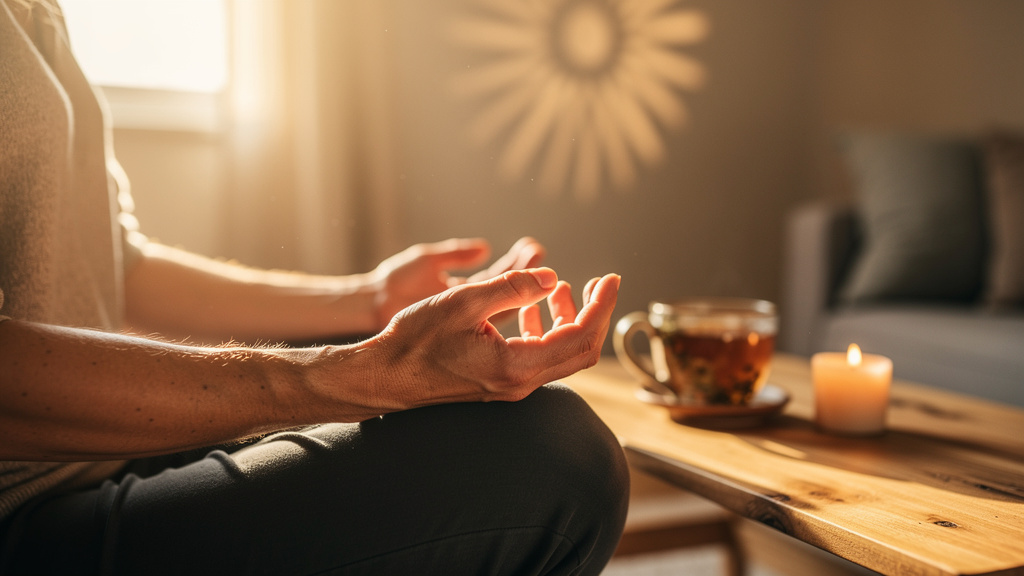
A beginner-friendly way to cultivate compassion is through a loving-kindness practice, sometimes called metta. You can sit quietly and silently repeat phrases such as, “May I be safe. May I be happy. May I be healthy. May I live with ease.” After offering these wishes to yourself, you can extend them to a loved one, then to a neutral person, then to someone you find difficult, and finally to all beings everywhere. You do not have to feel an overwhelming rush of emotion for the practice to work. The intention itself—the sincere wish for well-being—is what matters. Over time, this practice rewires the heart to respond to suffering, including your own, with care rather than contraction.
Extending compassion to others does not mean condoning harmful behavior or abandoning your boundaries. It means recognizing that every person you meet is carrying invisible burdens, just as you are. The person who cuts you off in traffic may be rushing to a hospital. The coworker who speaks sharply may be grieving a loss you cannot see. When you remember this hidden suffering, your heart naturally softens. You might offer a patient smile, listen without interrupting, or simply hold a silent wish for someone’s well-being as you pass them on the street. These small acts of compassion do more than help others; they dissolve the sense of separation that keeps inner peace at a distance, reminding you that you are part of a larger, interconnected whole.
Integrating Peace into Daily Life: Rituals and Routines
Inner peace is not meant to be confined to a meditation cushion or a quiet room at dawn. Its true power emerges when it spills into the ordinary moments of your day—the rush of morning traffic, the pile of unanswered emails, the bedtime routine with children, the quiet moments before sleep. Rituals and routines are the containers that hold this peace, giving it shape and consistency without requiring hours of free time. You do not need an elaborate ceremony. A simple ritual can be as brief as three conscious breaths before you start your car, or a moment of gratitude before you eat a meal. These small anchors remind your nervous system that peace is available, even in the midst of activity.
Morning routines set the tone for the entire day. Instead of reaching for your phone the moment you wake, consider sitting up in bed and taking five slow breaths, feeling the weight of your body against the mattress and the air moving in and out of your lungs. You might set a single intention for the day, such as “I will move with gentleness” or “I will return to my breath when I feel rushed.” This brief ritual centers you before the world makes its demands. Similarly, transitional rituals between work and home can help you release the residue of the day. Changing clothes, washing your hands mindfully, or sitting in your parked car for two minutes before entering your house creates a boundary that says, “I am here now, and I am allowed to be present.”
Evening routines offer a chance to close the day with kindness rather than regret. Before sleep, you might reflect on three moments when you felt even a flicker of peace, no matter how small. You might also acknowledge any difficulties without judgment, offering yourself forgiveness for moments when you reacted instead of responded. This practice of gentle review prevents the mind from chewing over the day’s stresses as you try to rest. It tells your body and spirit that the day is complete, that you are safe, and that you can let go. Over time, these nightly rituals train your mind to associate bedtime with surrender and trust rather than anxiety and planning.
The secret to making these routines stick is flexibility. A ritual that feels like another item on your to-do list will eventually be abandoned. Instead, let your practices serve you, not the other way around. If you miss a morning meditation, you can still take one conscious breath before opening your email. If your evening reflection feels too long, shorten it to a single sentence of gratitude. Peace is not earned through perfection; it is cultivated through gentle, repeated returns. As you weave these small rituals into the fabric of your days, you will discover that inner peace is not a destination you reach after completing your spiritual checklist. It is a quiet companion that walks with you through the laundry, the meetings, the meals, and the ordinary, sacred moments of being alive.
Final Reflections
As you close this guide, remember that the gentle awakening you seek has already begun. Inner peace is not a distant summit reserved for the perfectly disciplined or the spiritually advanced. It is the quiet presence that has been with you all along, waiting beneath the noise of your thoughts, beneath the rush of your responsibilities, beneath the stories you tell yourself about who you should be. You do not need to earn it. You only need to remember it, to return to it, and to trust that it is always available, even on the days when it feels hidden.
There will be mornings when your mind feels too busy to sit still, and evenings when peace seems impossible to find. On those days, be especially kind to yourself. The path of awakening is not a straight line; it is a spiral that brings you back to the same lessons with greater understanding each time. Every time you notice your breath, every time you offer yourself a word of compassion, every time you pause before reacting, you are weaving peace into the fabric of your life. These small acts matter more than any grand gesture.
May you move forward with curiosity rather than judgment, with patience rather than pressure, and with an open heart that knows its own worth. You are not behind. You are not broken. You are exactly where you need to be, and the peace you seek is already within you, as close as your next breath. May your journey be gentle, and may you find, again and again, the quiet center that has been waiting for you all along.